What happens when two of the most influential storytellers of the 21st century stop creating worlds and begin creating a conversation?
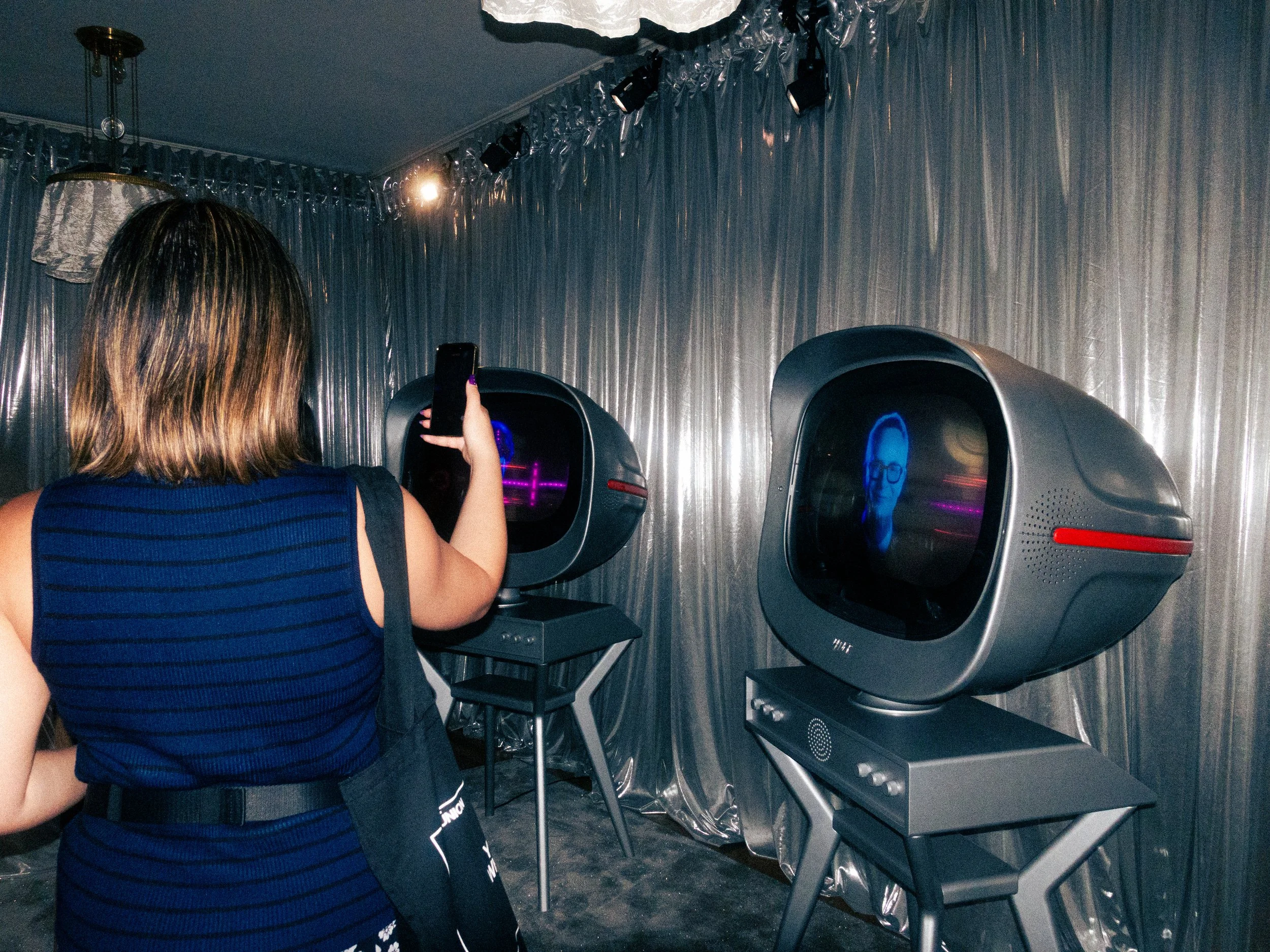
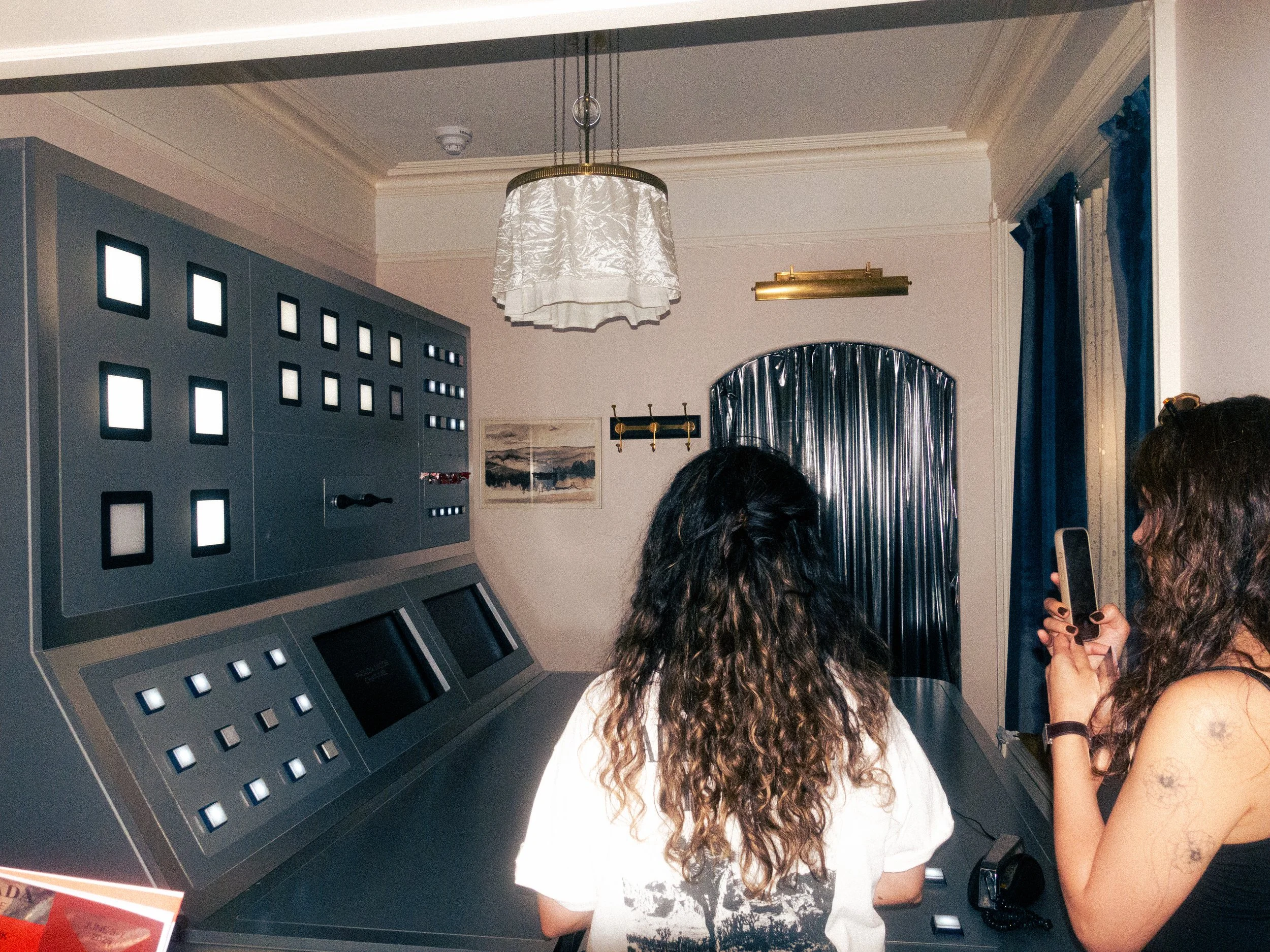
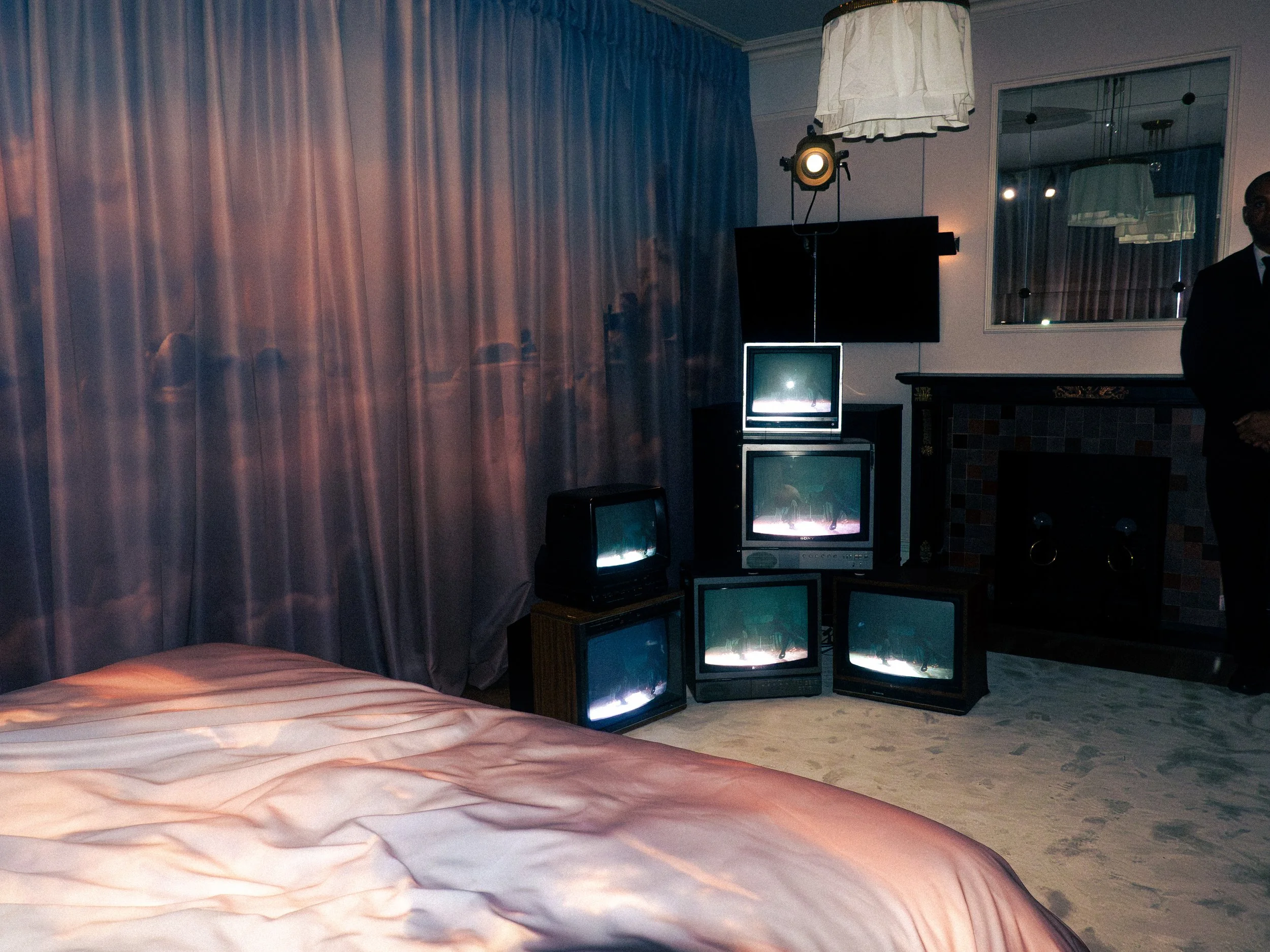
This question sits at the center of Satellites II, the immersive exhibition presented as part of Prada Mode New York at the iconic Hotel Chelsea. Conceived by filmmaker Nicolas Winding Refn and game creator Hideo Kojima, the project transcends the conventions of both contemporary art exhibitions and luxury brand activations. Rather than presenting a collection of objects to be viewed, Satellites II functions as a living exchange—an exploration of communication, memory, technology, and human connection unfolding across a series of installations, performances, broadcasts, and encounters.
For decades, Refn and Kojima have worked in separate mediums while investigating remarkably similar questions.
Refn, celebrated for films such as Drive, Only God Forgives, and The Neon Demon, has built a cinematic language rooted in atmosphere, symbolism, and psychological space. His work often exists between reality and dream, constructing worlds that feel simultaneously intimate and alien. Kojima, meanwhile, transformed video games into a legitimate narrative art form through groundbreaking titles such as Metal Gear Solid and Death Stranding. His projects routinely challenge audiences to reconsider the relationship between technology, information, identity, and society itself.
Though one works with film and the other with interactive media, both creators share a fascination with invisible networks—the systems that connect people across distance, language, and time.
Satellites II emerges directly from this shared curiosity.
Rather than producing a traditional exhibition, Refn and Kojima transformed their ongoing dialogue into an artistic medium. Visitors move through fragments of conversation, recorded exchanges, live performances, visual installations, and environmental interventions that collectively explore what it means to connect in an increasingly mediated world.
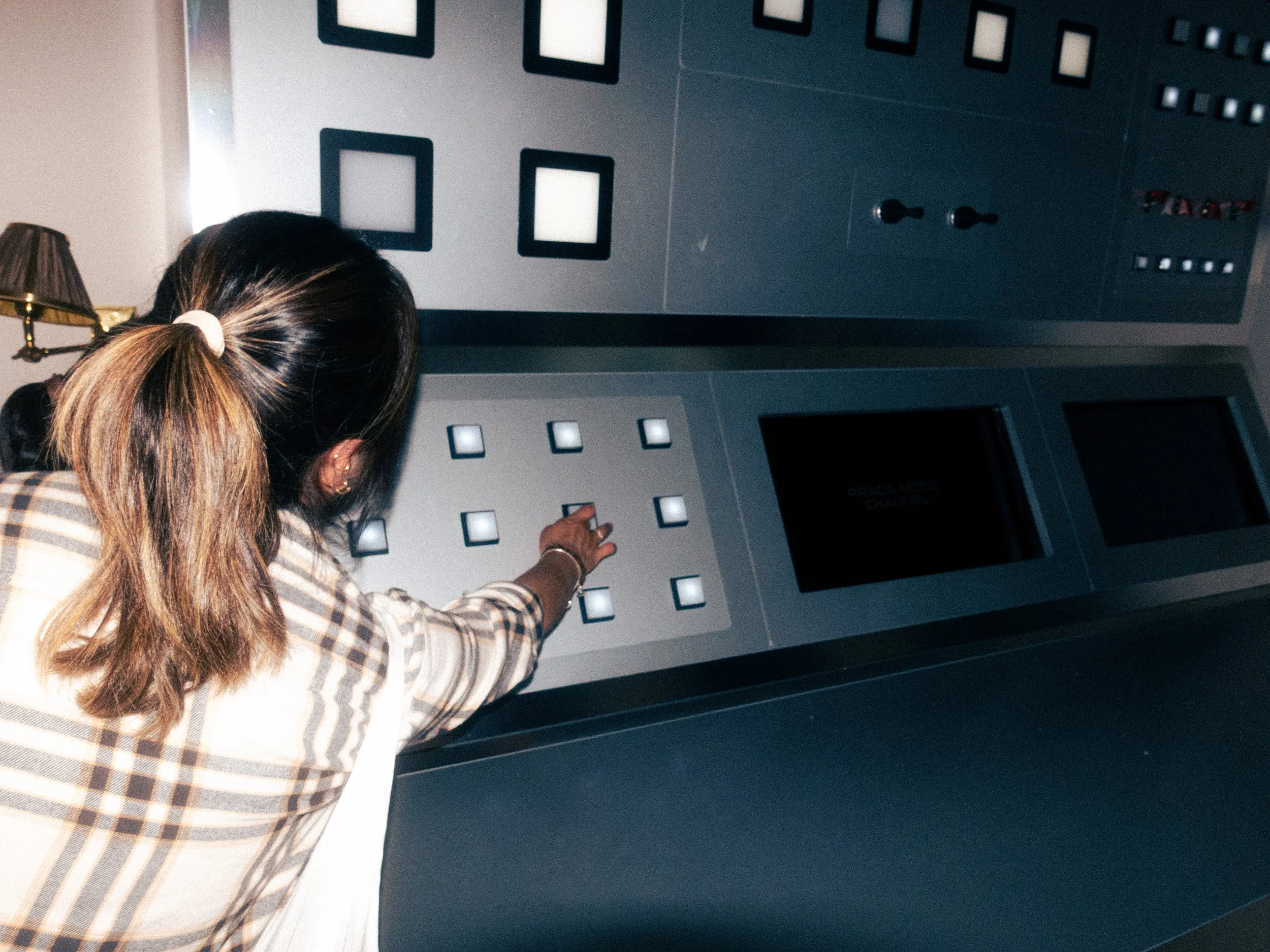
The exhibition's title is particularly revealing.
Satellites orbit independently while remaining connected to a larger system. They transmit information across vast distances. They observe, relay, and communicate. In many ways, the metaphor serves as a framework for understanding not only the relationship between Refn and Kojima, but contemporary existence itself.
Today, our lives are increasingly defined by transmission.
Messages travel instantly across continents. Relationships exist simultaneously online and offline. Artificial intelligence generates dialogue. Digital platforms mediate human interaction. We are more connected than any generation before us, yet loneliness, fragmentation, and isolation remain defining characteristics of contemporary life.
Satellites II does not attempt to solve this contradiction.
Instead, it inhabits it.
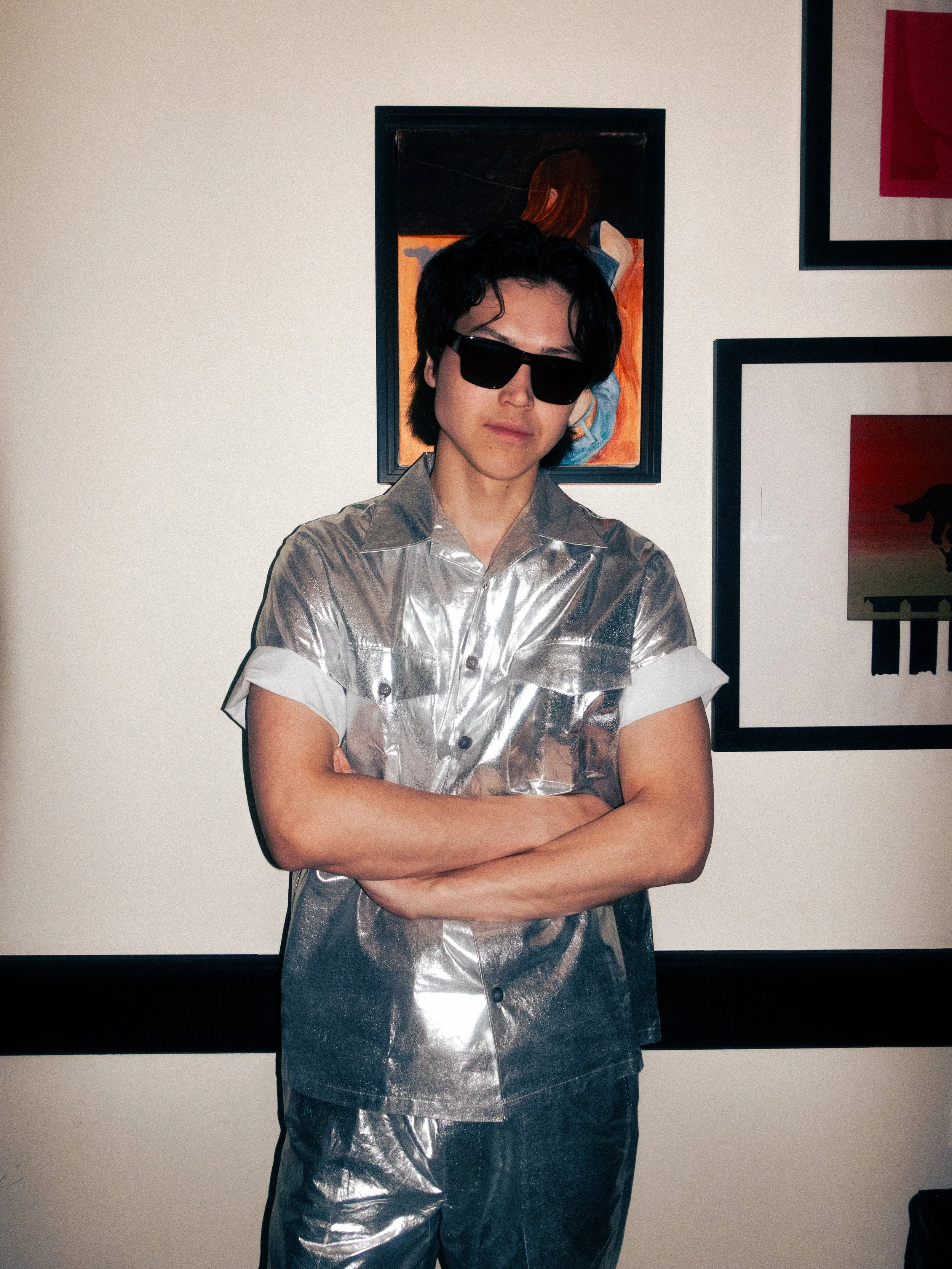
Model and Prada Mode ll event staff, Russell Kenzhebayev.
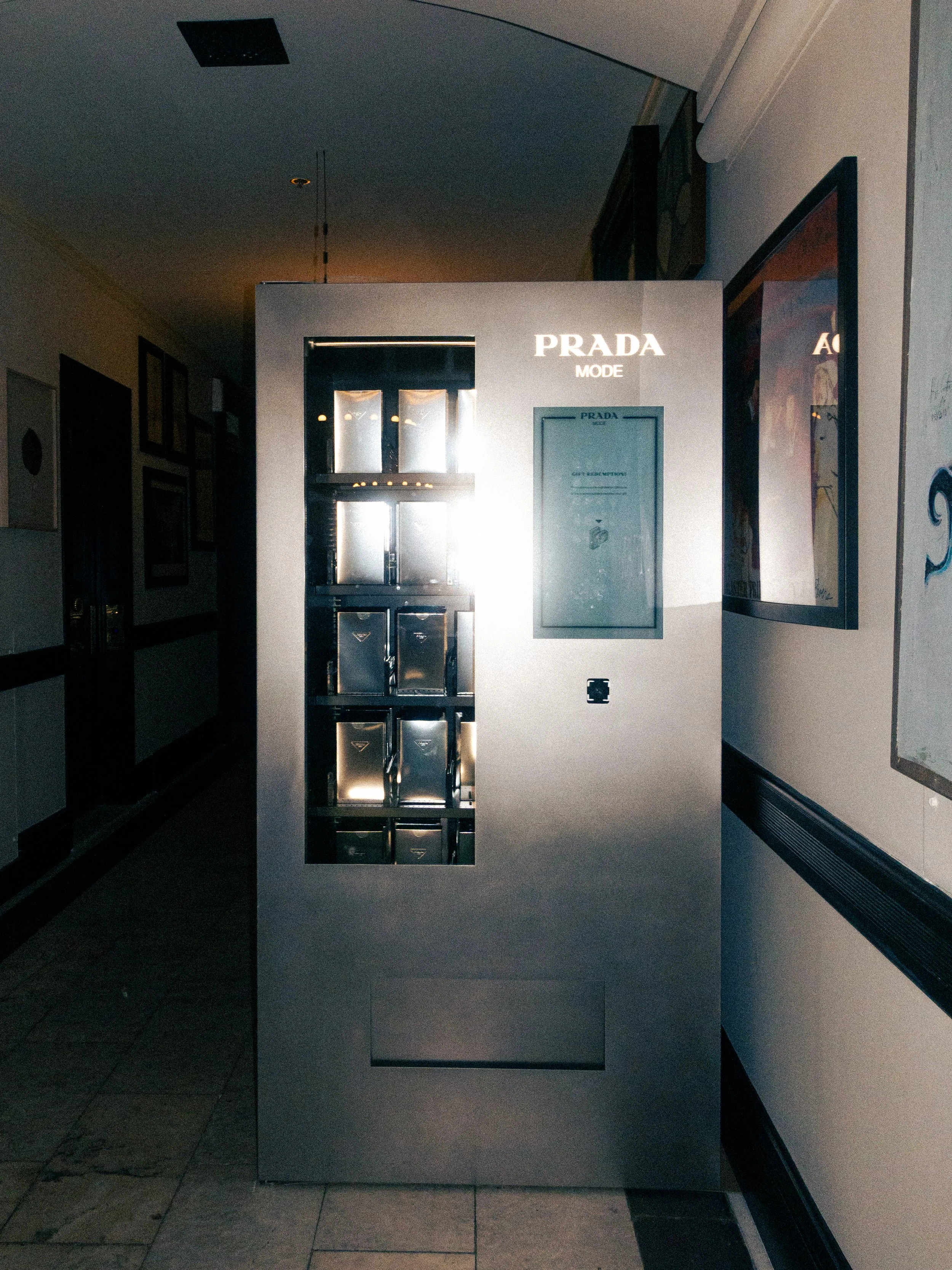
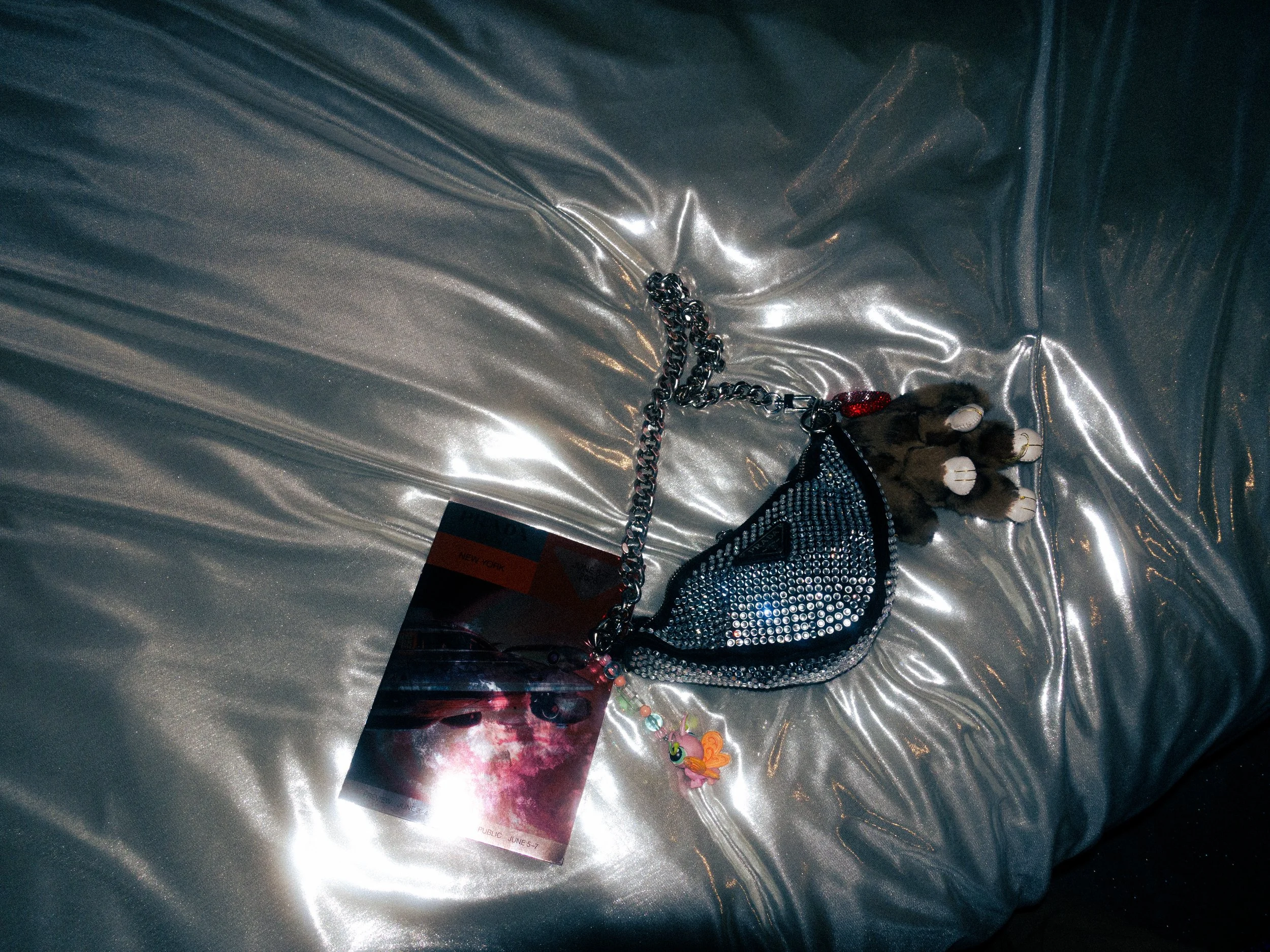
A prada Vending Machine, where guests can collect a limited edition souvenir.
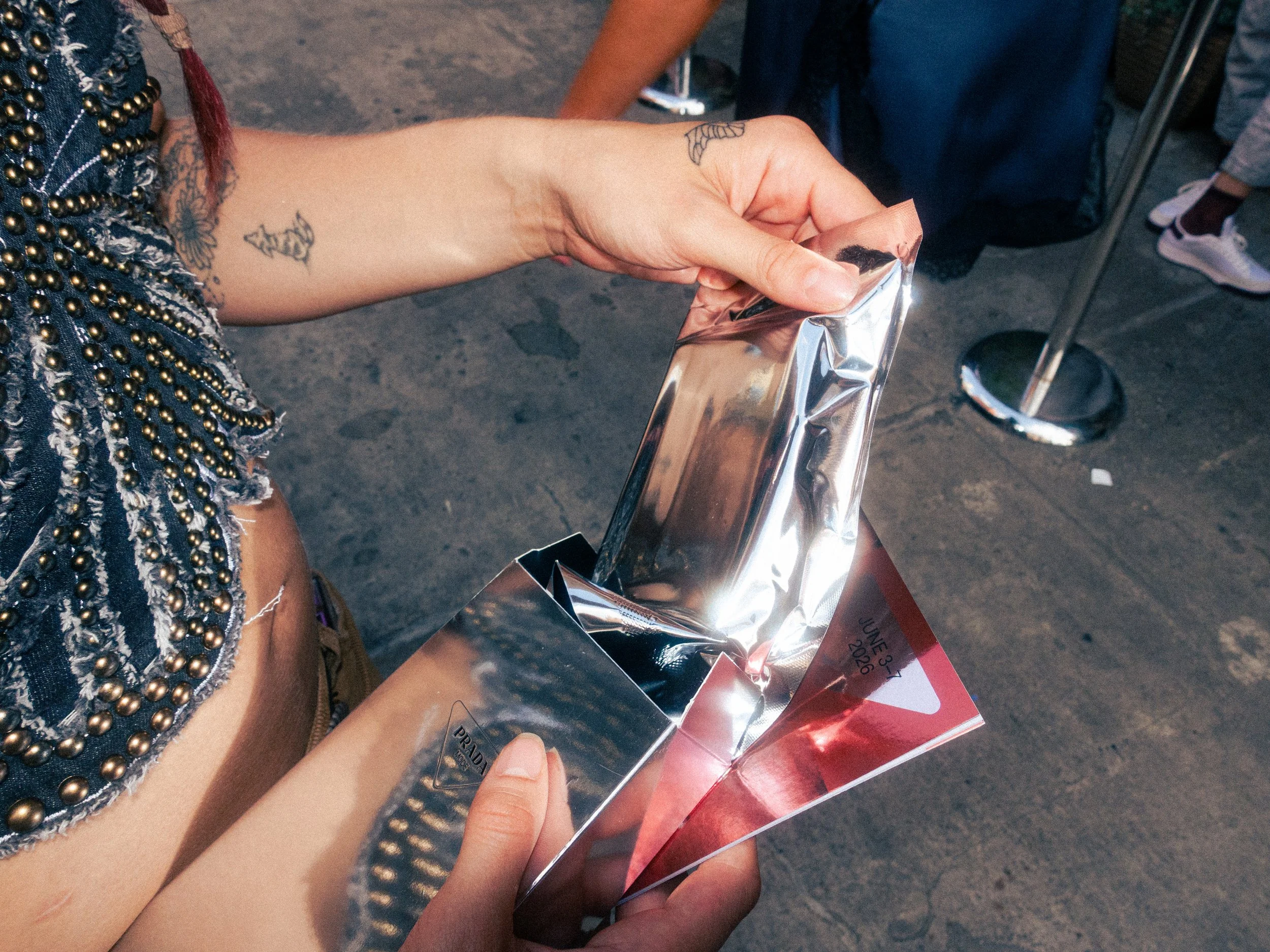
A collectible cassette tape in it’s original packaging.
The exhibition asks visitors to consider how meaning is created between individuals rather than within them. Art becomes less about the object and more about the exchange. The work exists not solely in the installations themselves, but in the conversations they provoke and the relationships they temporarily construct.
This approach feels particularly significant within the context of Prada Mode. While many luxury brands engage with contemporary art as a means of cultural positioning, Prada has consistently approached artistic collaboration as an intellectual exercise. Here, fashion serves not as the subject but as the platform—a framework through which ambitious interdisciplinary experimentation can occur.
What emerges is neither a film, nor a video game, nor a conventional exhibition.
It is a network.
A system of ideas moving between cinema and technology, artist and audience, physical space and digital consciousness.

The line queue for Prada Mode ll at Hotel Chelsea.
In an era increasingly defined by algorithms, artificial intelligence, and endless streams of information, Satellites II offers something unexpectedly human. Beneath its technological themes and speculative aesthetics lies a simple proposition: connection remains our most important creative act.
The exhibition's greatest achievement is not its scale or spectacle, but its ability to transform conversation itself into an artistic medium.
In the hands of Nicolas Winding Refn and Hideo Kojima, communication becomes sculpture.