
Arete Is Becoming Fashion’s New International Discovery Engine
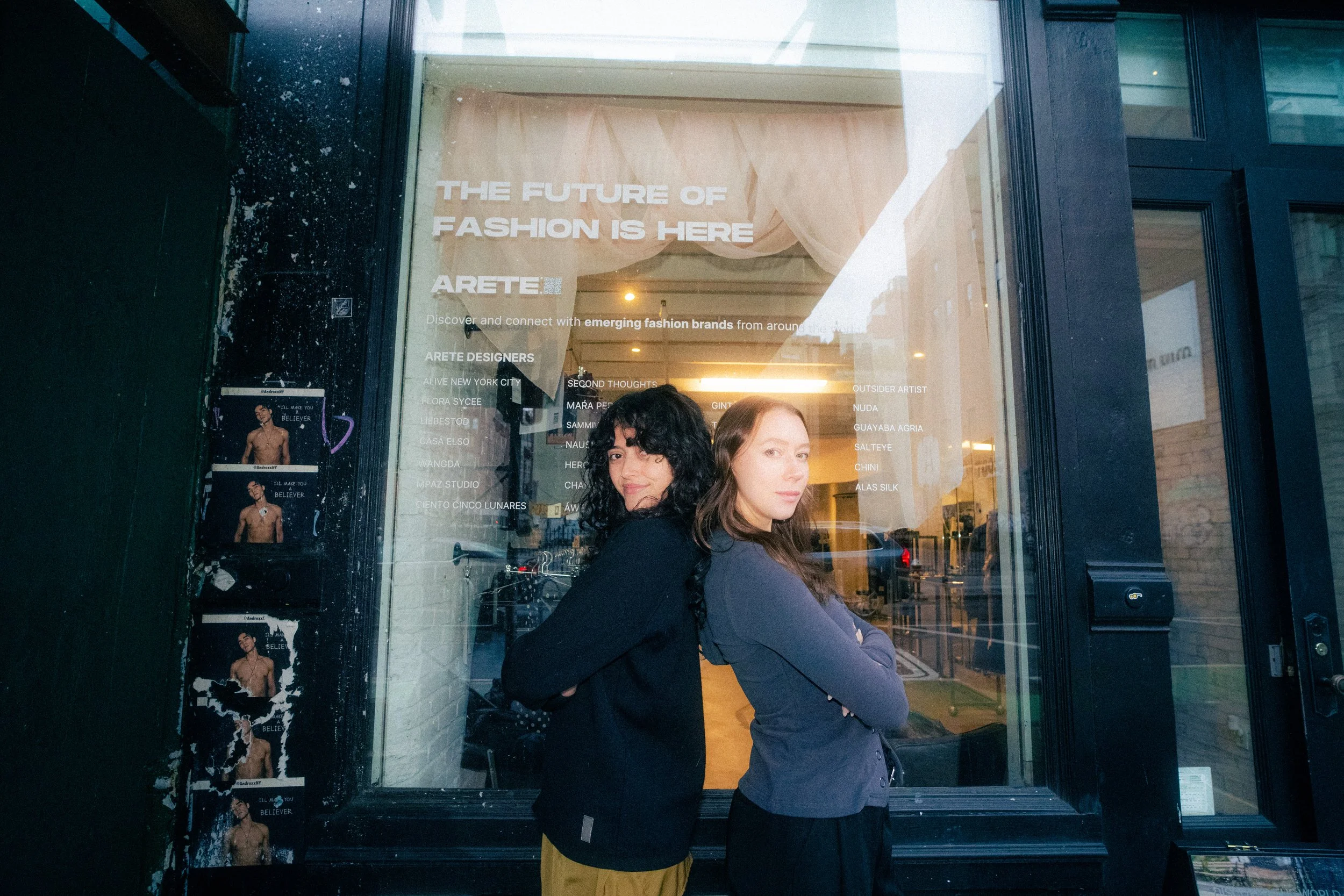
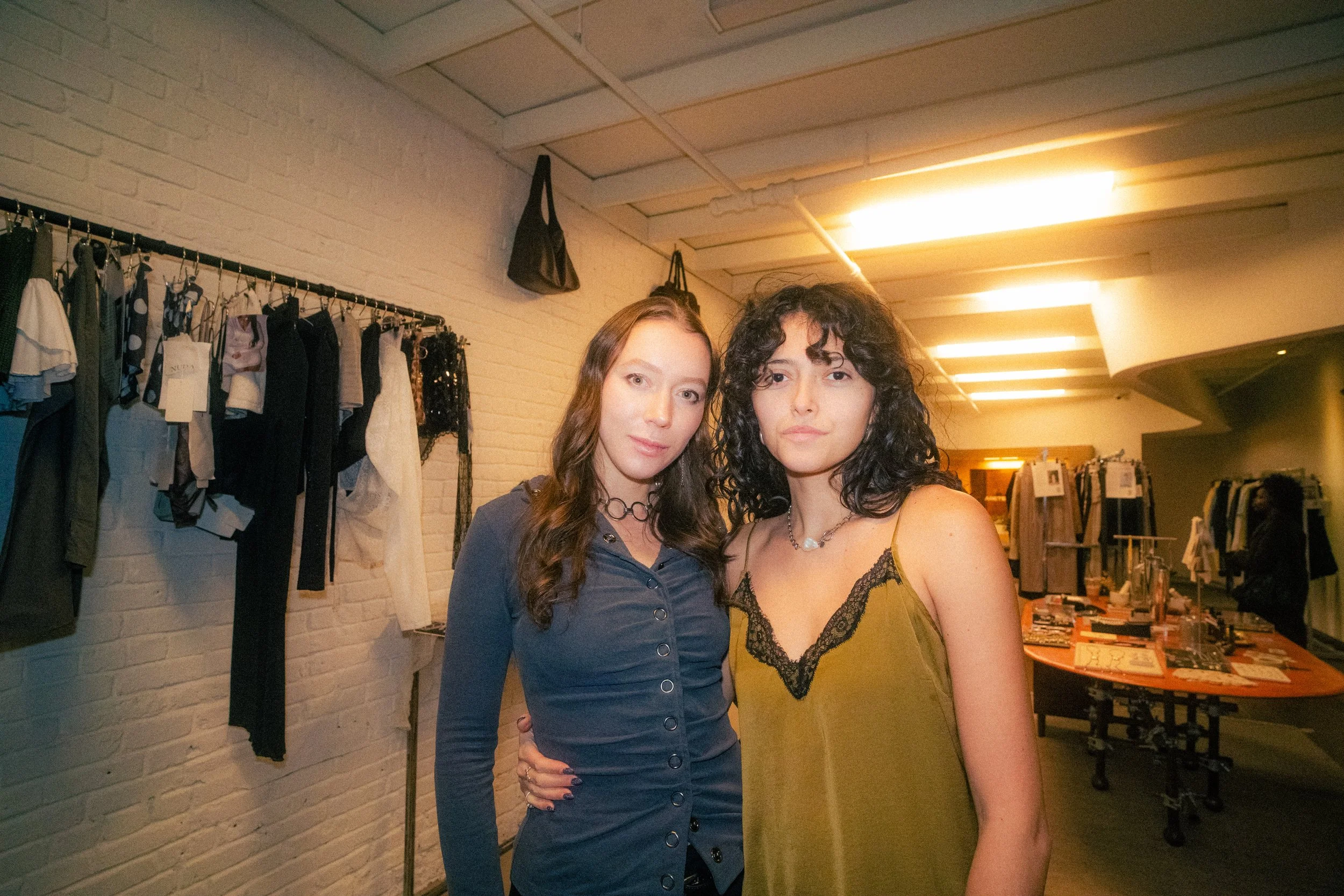
Founders MJ Perez (left) and Kotryna Jukneviciute (right).
Inside a bright corner of downtown New York, just beyond the hum of Grand Street traffic, Arete Studios buzzes with the kind of energy that only comes from a brand inventing the future as it goes. Designers drift in and out. Influencers swing by in curated pieces sourced from half a world away. And at the center of it all is founders Kotryna Jukneviciute, and MJ Perez — builders with both the fire of a creative and the precision of a machine-learning engineer by proxy.
What started as a small, experimental intersection between fashion and technology has quickly evolved into one of New York’s most quietly radical platforms — a discovery engine for global designers who have the talent, vision, and craft, but not the infrastructure to break into the American market. “We never realized at first that we were solving this huge gap,” Jukneviciute tells me. “But these designers in Argentina, Hong Kong, Bogotá — they’re producing real fashion. High-quality, small-batch, art-driven work. And almost no one in the U.S. can access them.”
She pauses, then adds:
“It’s not that these brands can’t compete — it’s that the system wasn’t built for them to break in.”
The problem? American discovery is broken. Most U.S. shoppers never see the fashion world’s rising talent. Tariffs, shipping costs, customs blockages, and poor visibility keep global brands locked out of American culture. And what slips through is often reduced to trends, not artistry.
Arete Studios is rewriting that equation. Jukneviciute and her co-founder MJ Perez— an engineer who built the foundational ranking systems for Uber Eats — have developed a hybrid platform that blends the precision of AI with the spirit of a global fashion house. Their mission is simple but ambitious: Make emerging designers discoverable, accessible, and scalable.
MJ, the platform’s product architect and co-founder, is the quiet powerhouse making that vision possible. A former machine learning scientist with a substantial amount of time in the field, MJ built Arete’s internal and external product systems — from the onboarding tools for brands to the personalized discovery mechanisms for shoppers.
“With such a small team, problem-solving becomes everything,” MJ says. “I’m used to complex technical challenges. So when something breaks or something needs optimizing, I’m not scared. I just figure it out.”
That mindset is the backbone of the brand’s scrappiness. But MJ’s role extends far beyond engineering.
“I’m doing product, I’m doing marketing, I’m running ads, I’m doing customer service, and today I’m shipping out our Black Friday orders. We’re a tiny team — everyone does everything.”
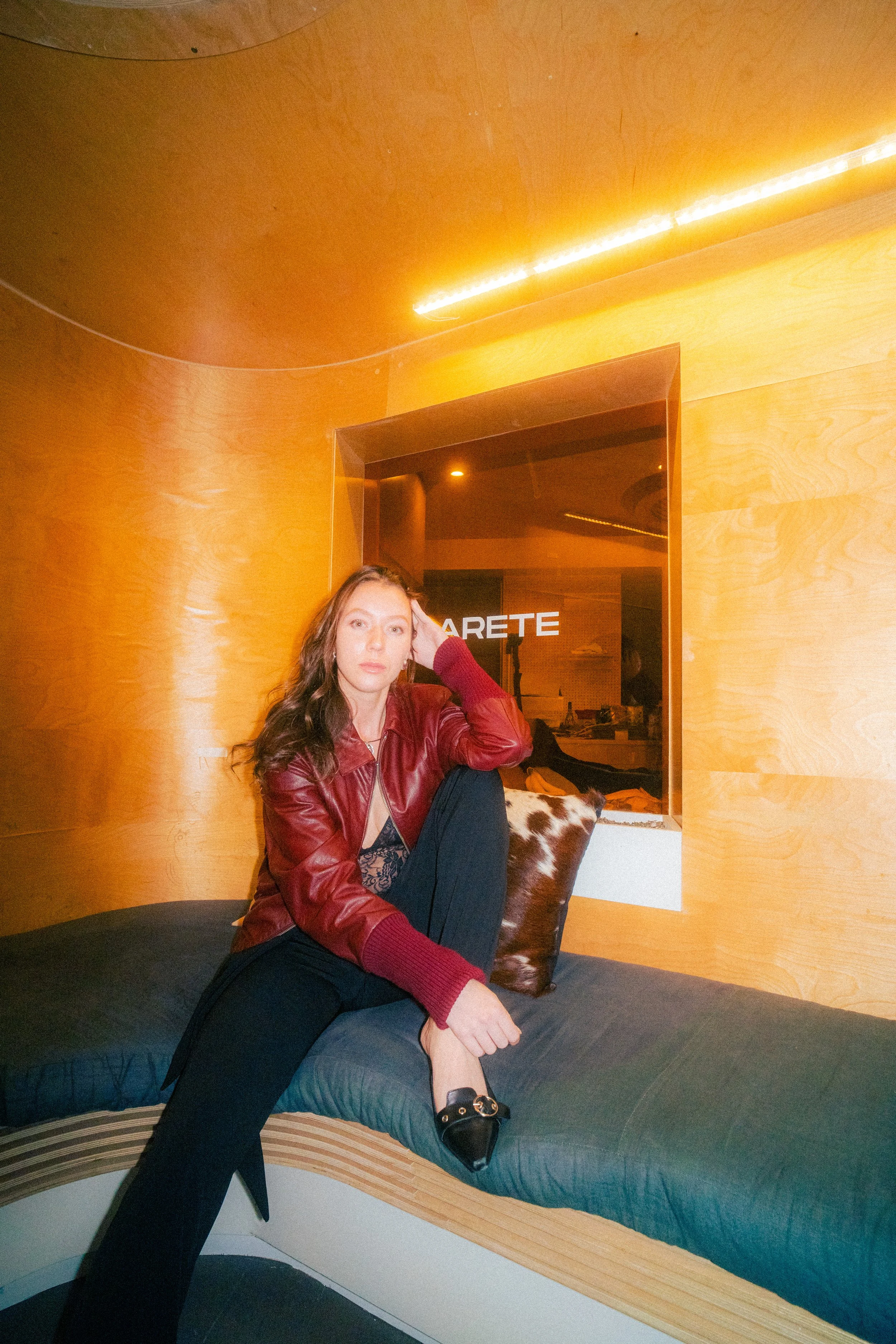
Kotryna Jukneviciute, Founder.
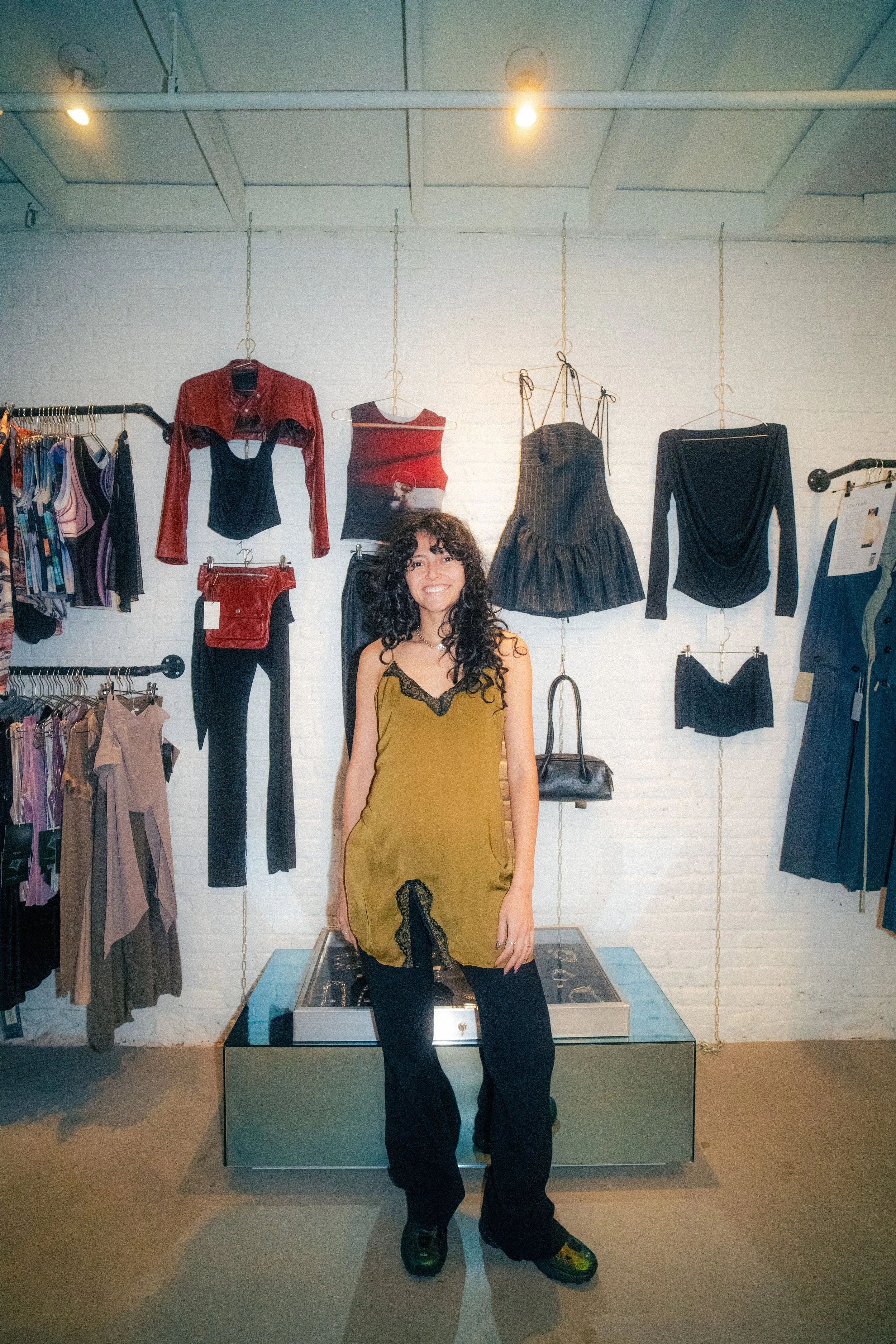
MJ Perez, Founder.
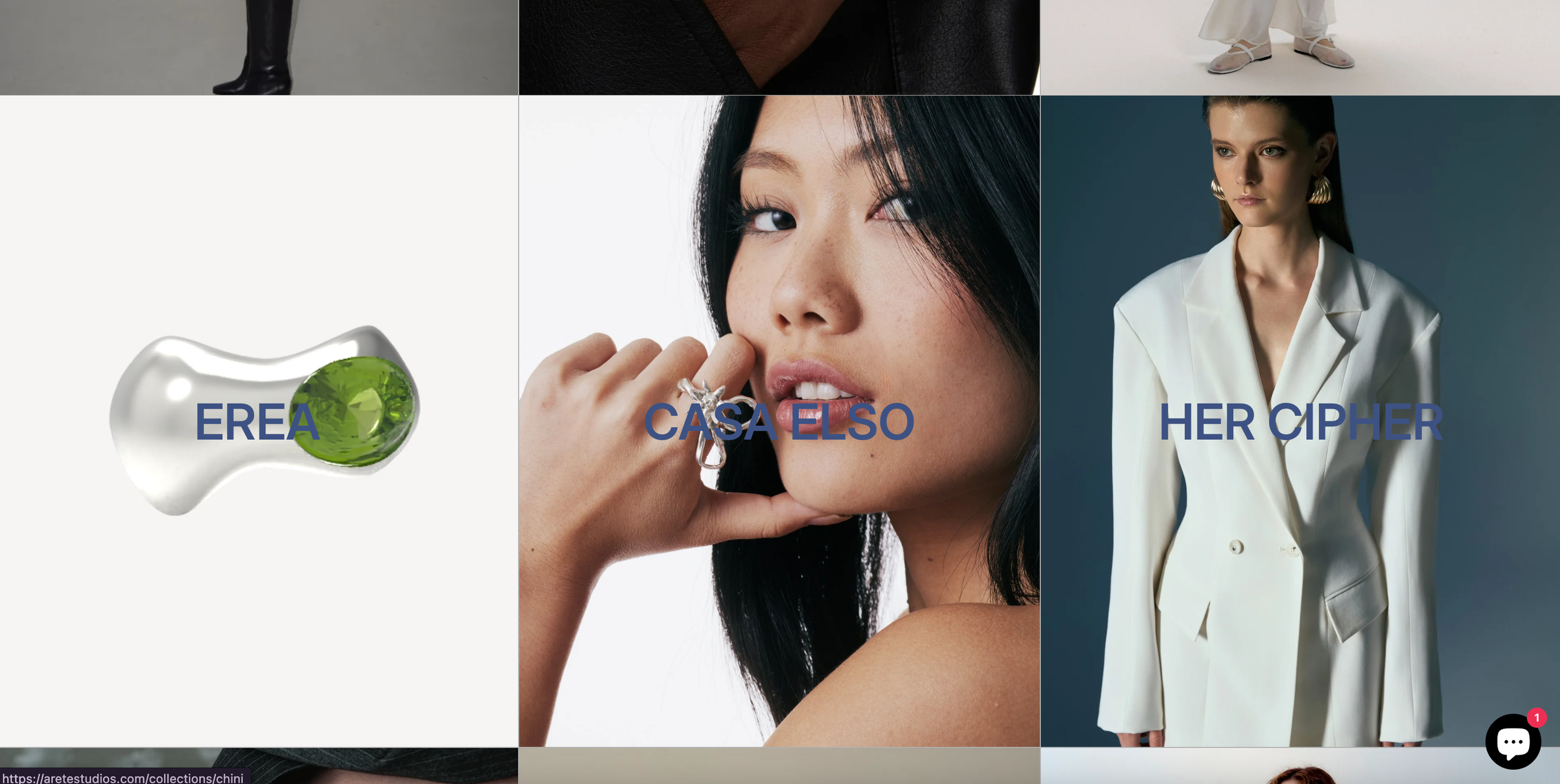
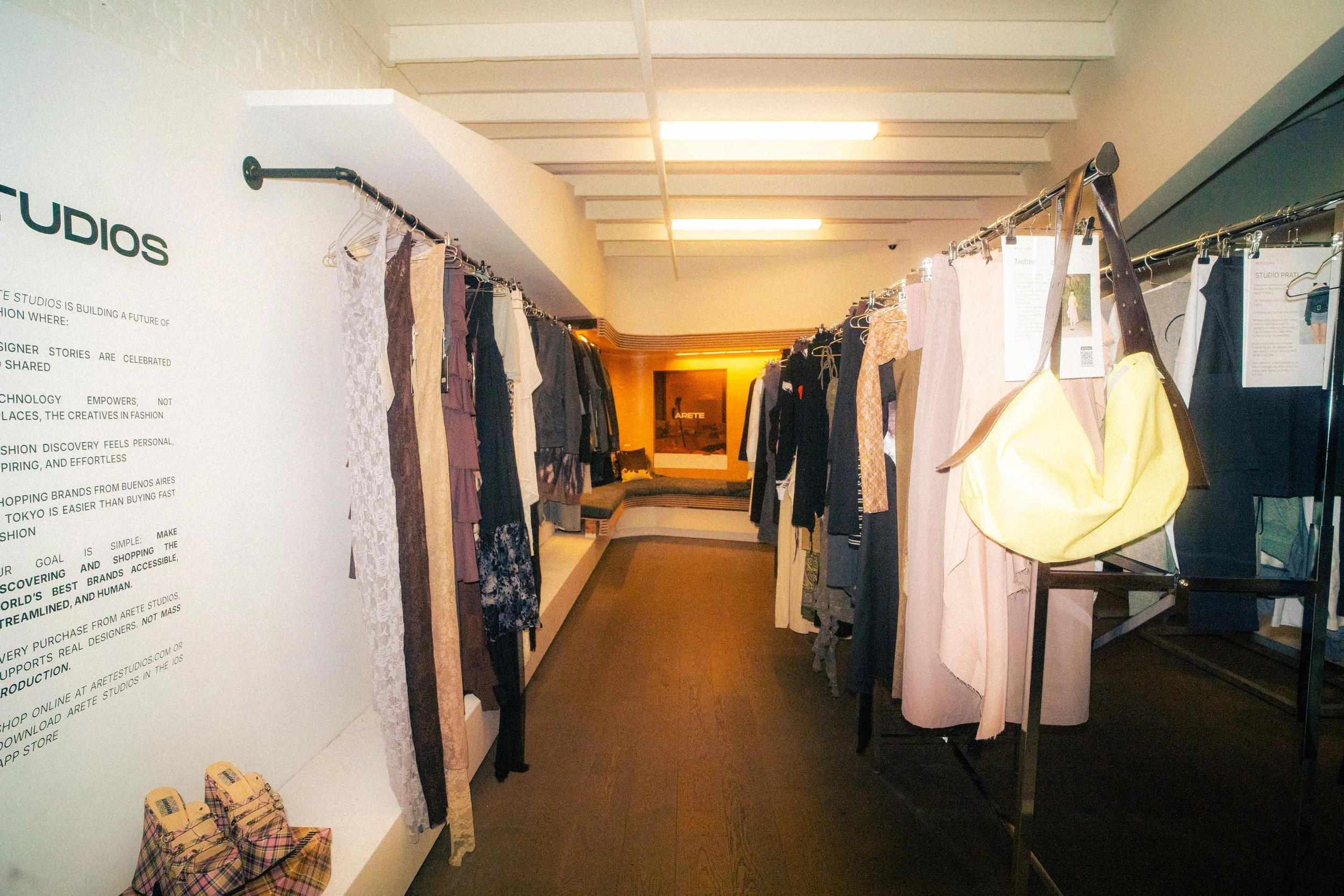
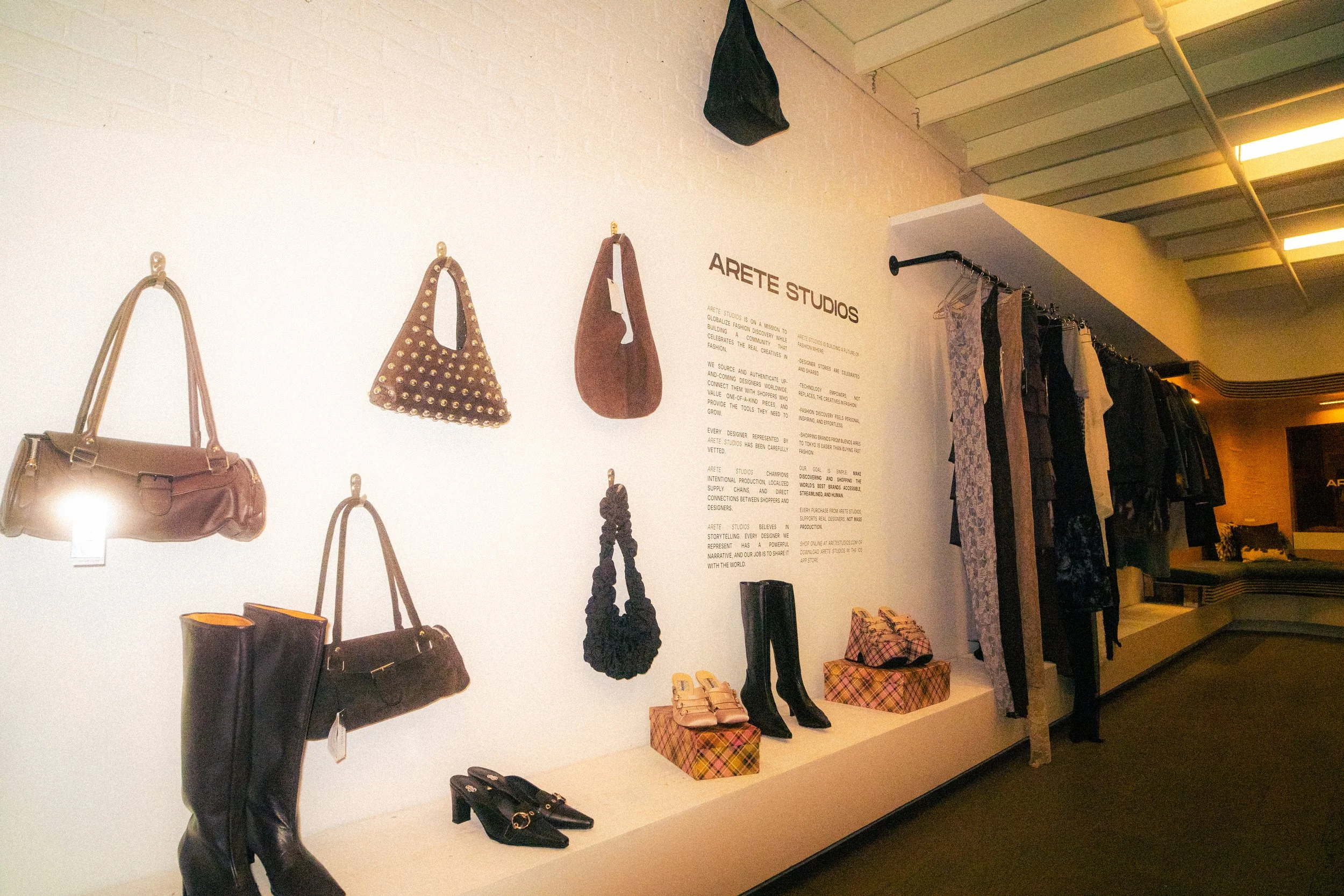
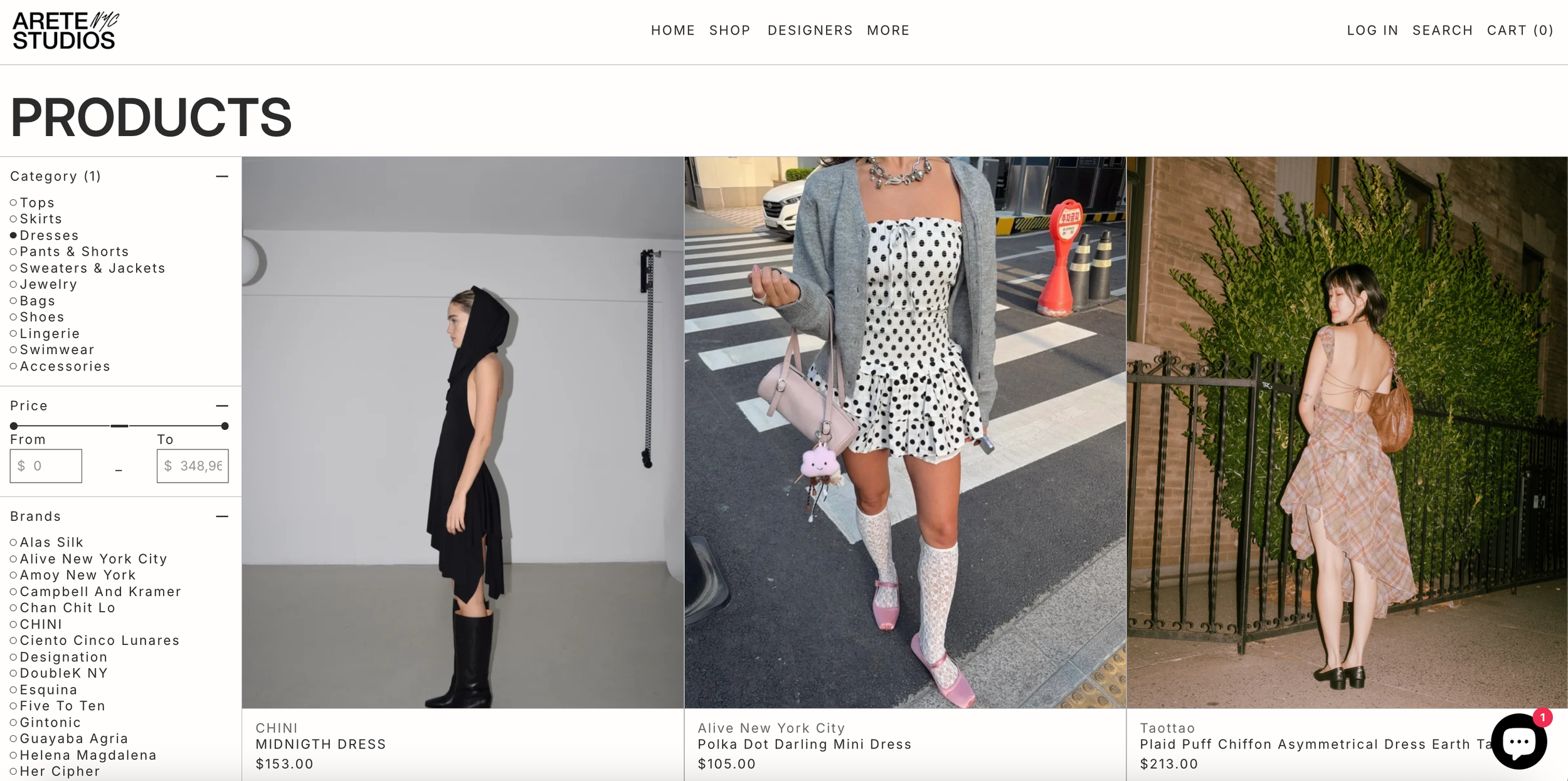
A glimpse of the curated designers on Arete.
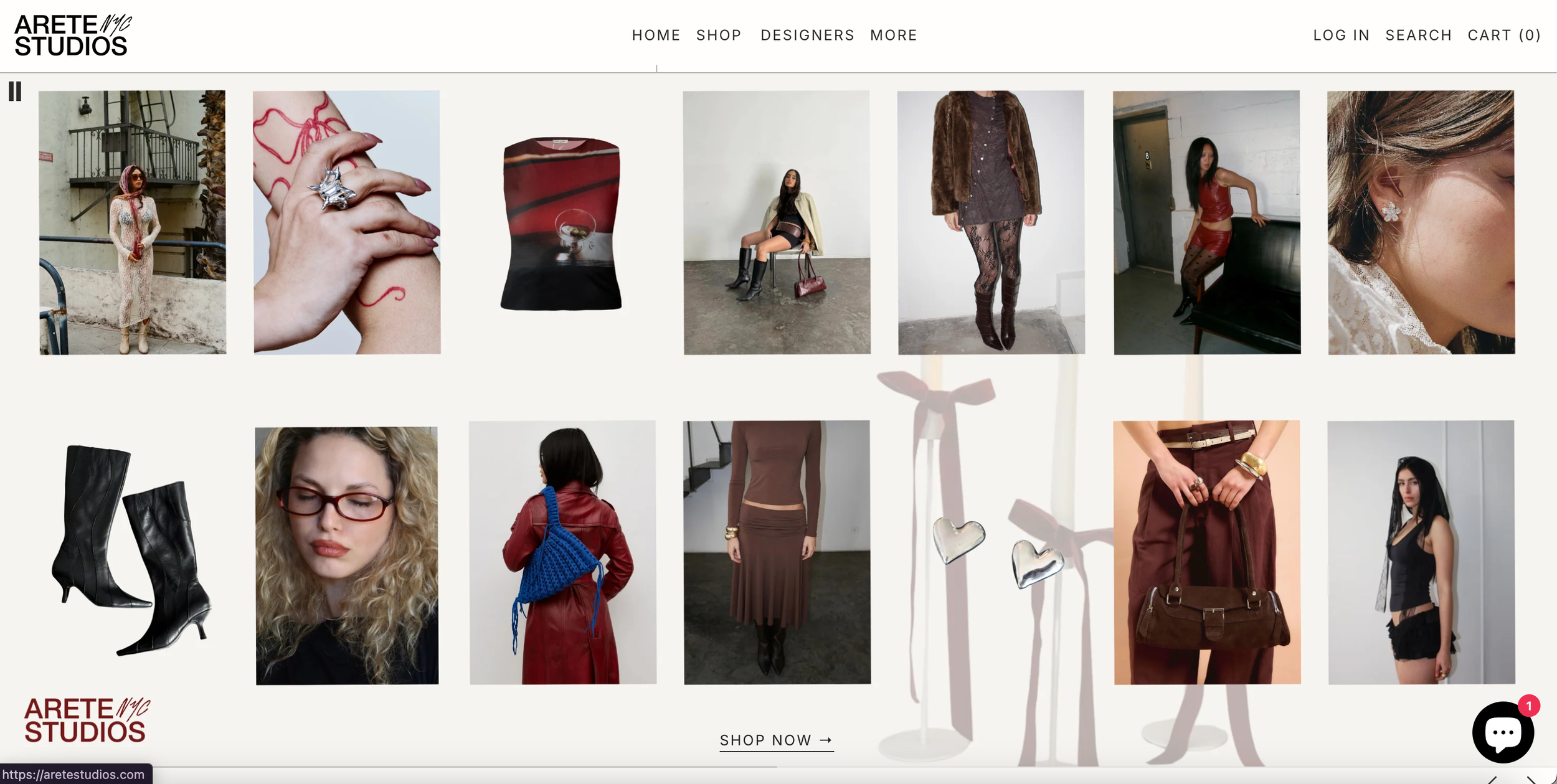
In the age of Gen Z’s algorithmic instincts, Arete is already culturally dialed in. Through semantic search, visual recognition, and vibe-based discovery (“Brat Girl Summer,” “Cottagecore,” “Night Luxe”), the platform speaks the same language its audience does.
Arete Studios doesn’t just surface clothing. It surfaces context. Every designer on the platform comes with a story: where they produce, why they started, what they stand for.. This is where the brand finds its heartbeat. “Personalization for us extends beyond technology,” Jukneviciute explains. “We want to celebrate the human behind the garment.” This blend — machine learning + storytelling — is what separates Arete from traditional retailers.
“Gen Z doesn’t shop by category, they shop by mood — we built the tech to meet them where they already are.”
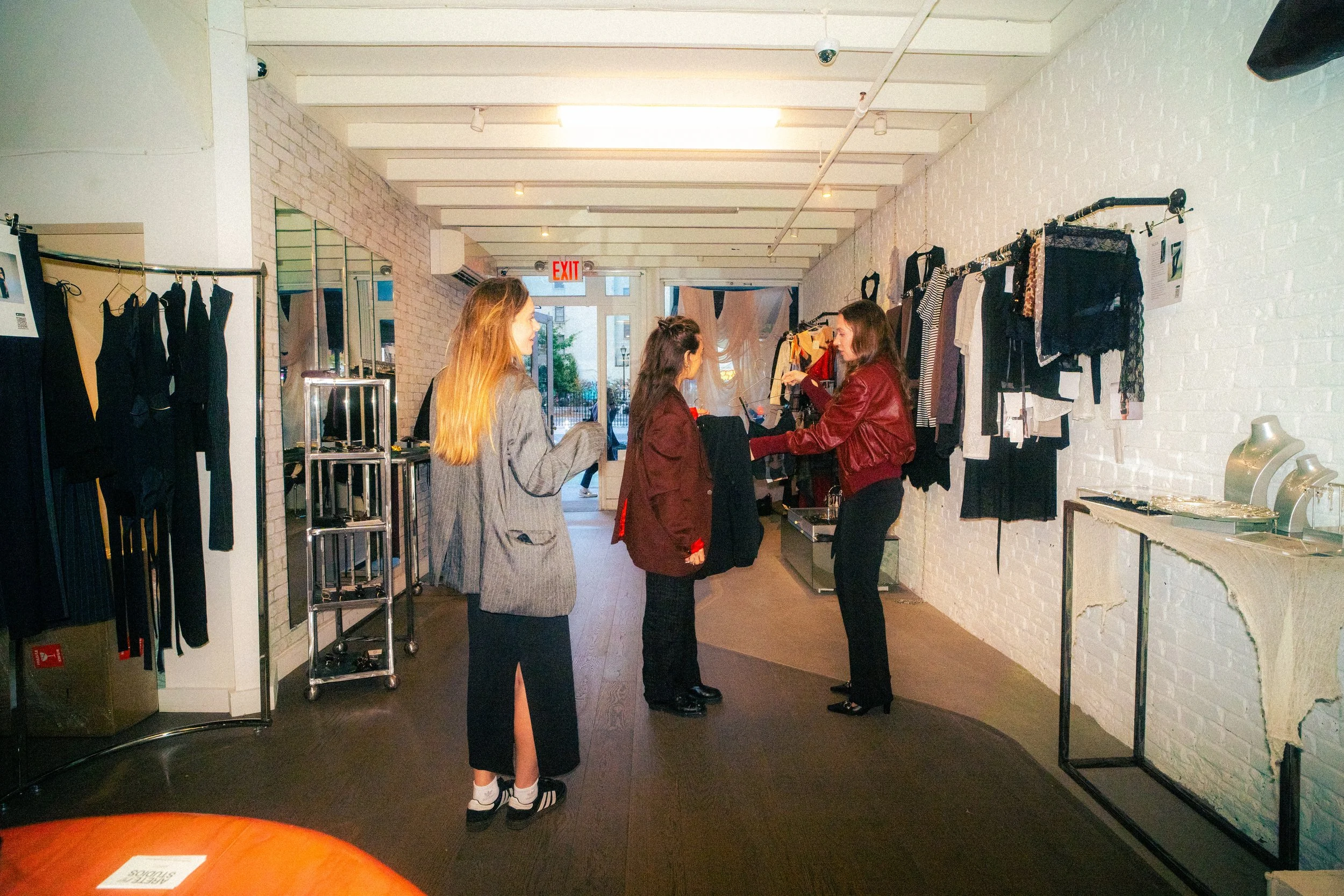
Kotryna and Arete Staff assisting a customer.
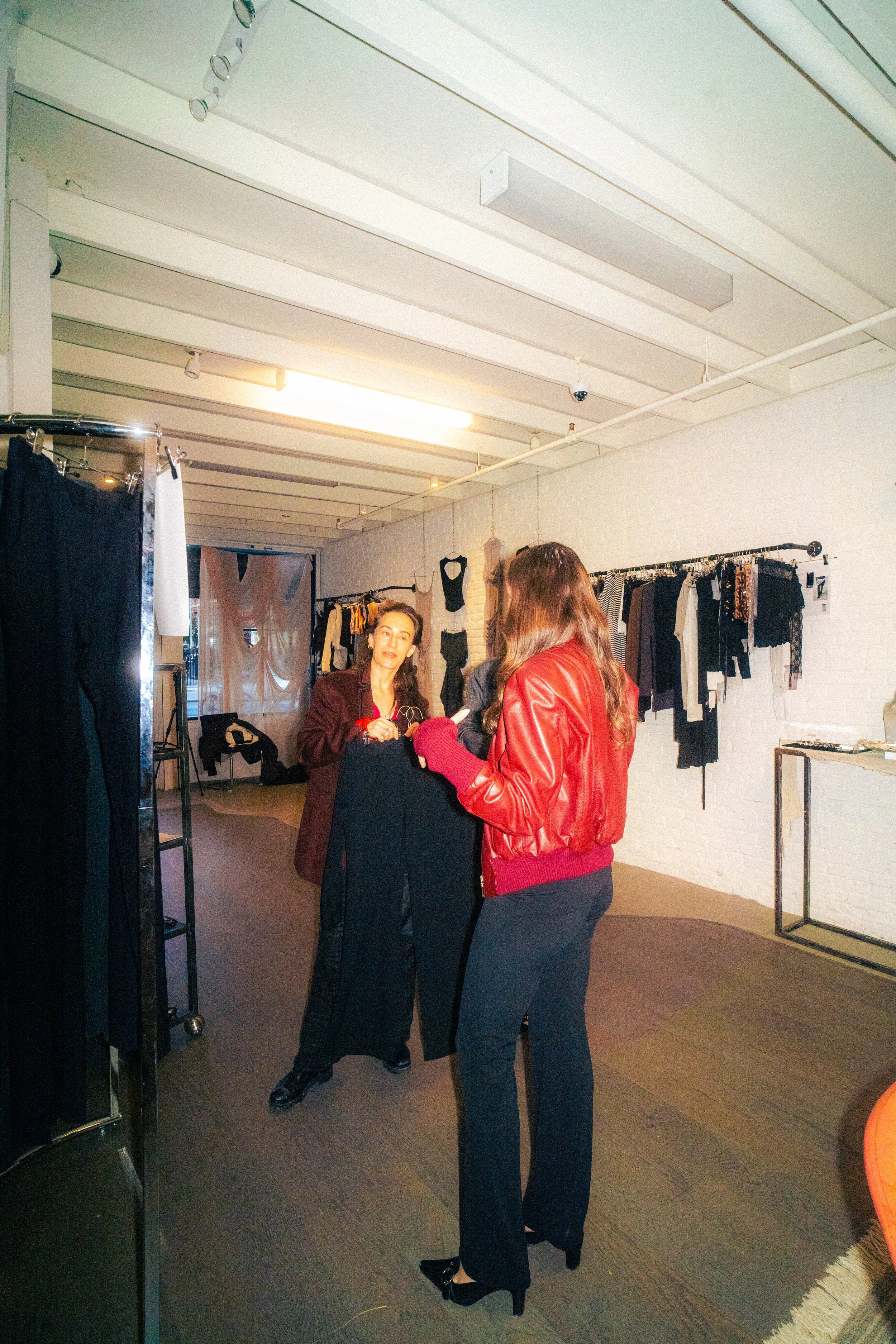
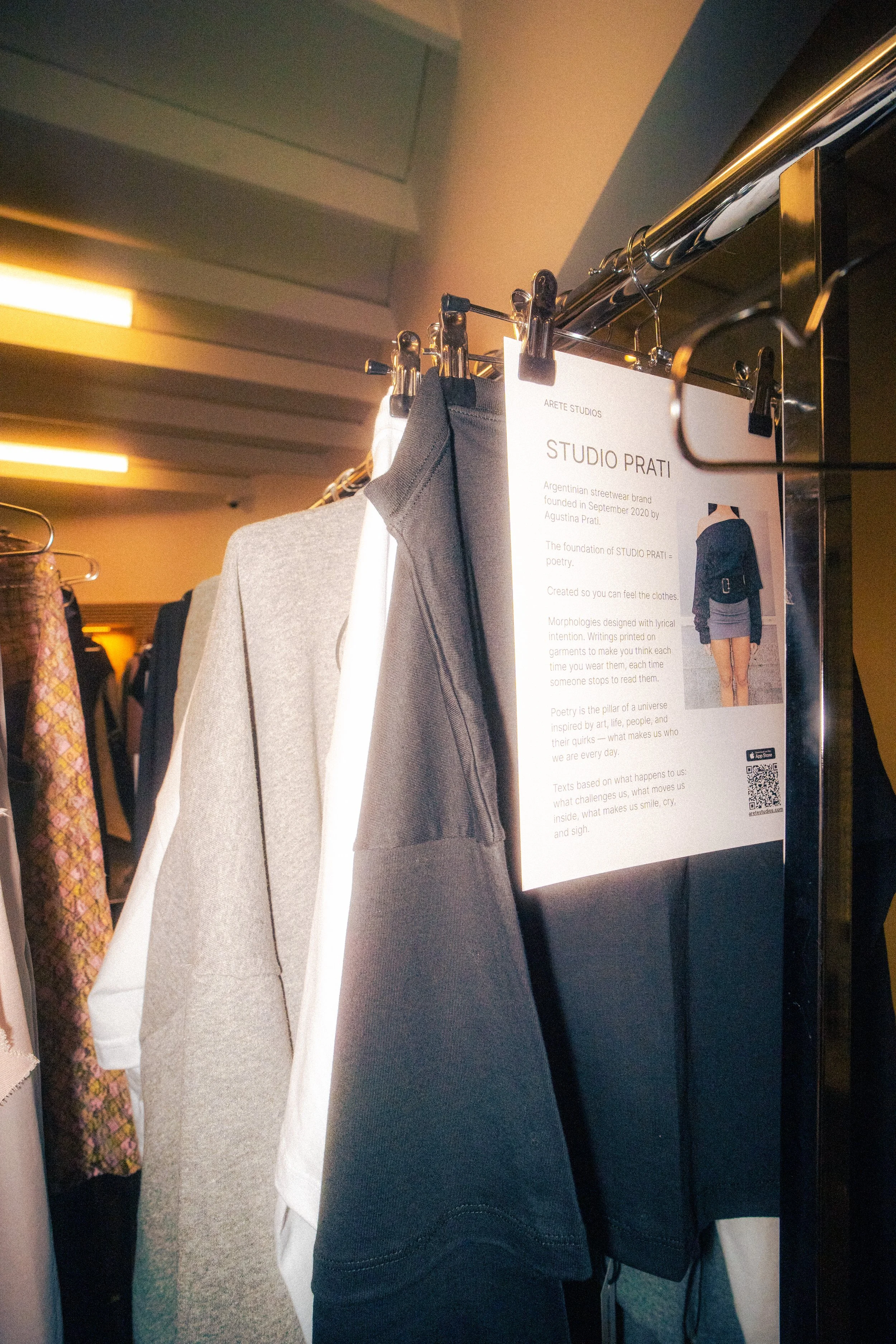
It’s infrastructure disguised as culture. The glamorous clothes and curated racks disguise a brutal truth: Arete Studios is built by a tiny team. “We’ve built everything with just a couple people. Most companies at this stage have already raised millions,” Kotryna says, laughing but not joking. “We haven’t. We’re sustaining this ourselves right now.”

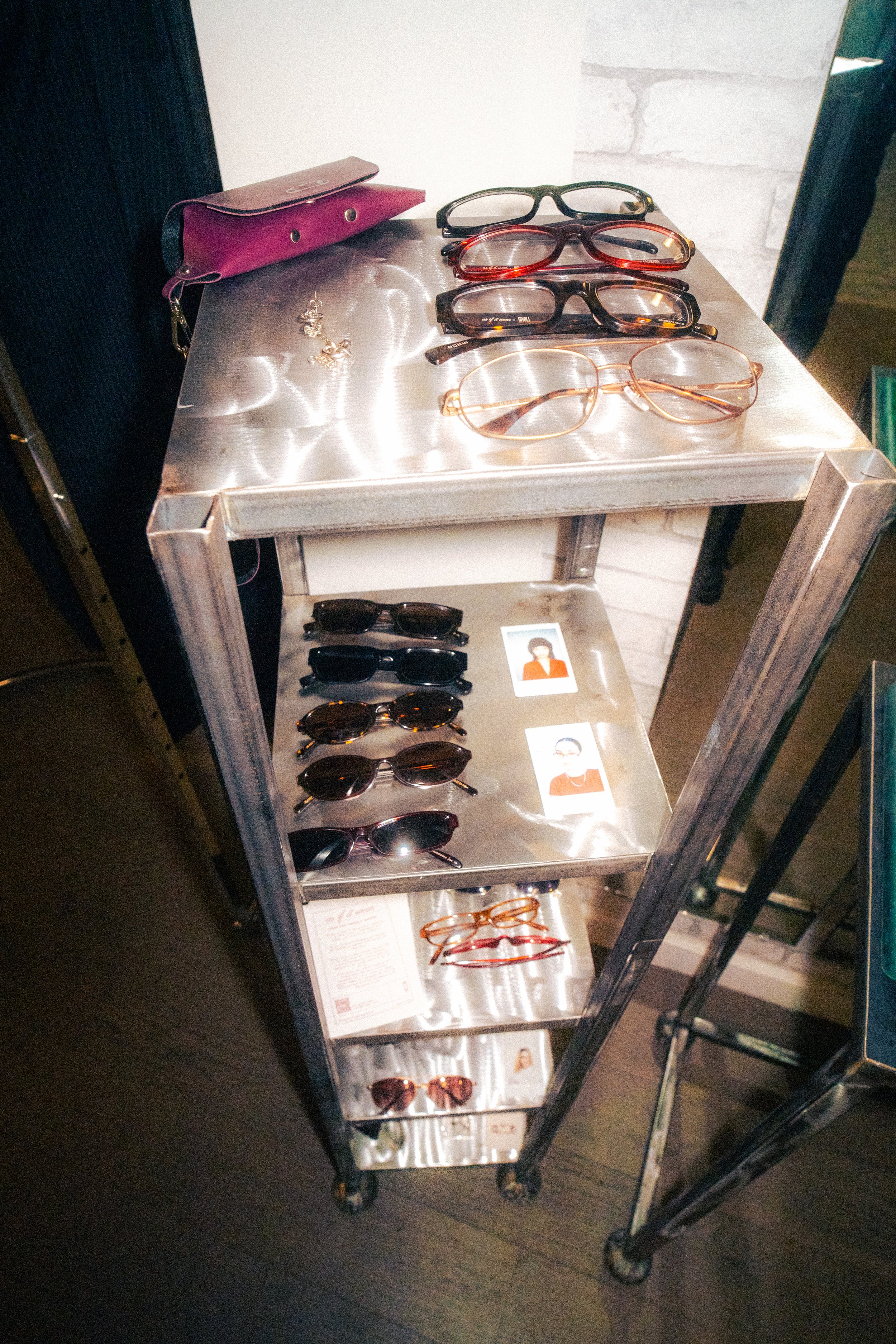
Captivating jewelry and accessory designers fill the corners of the storefront.
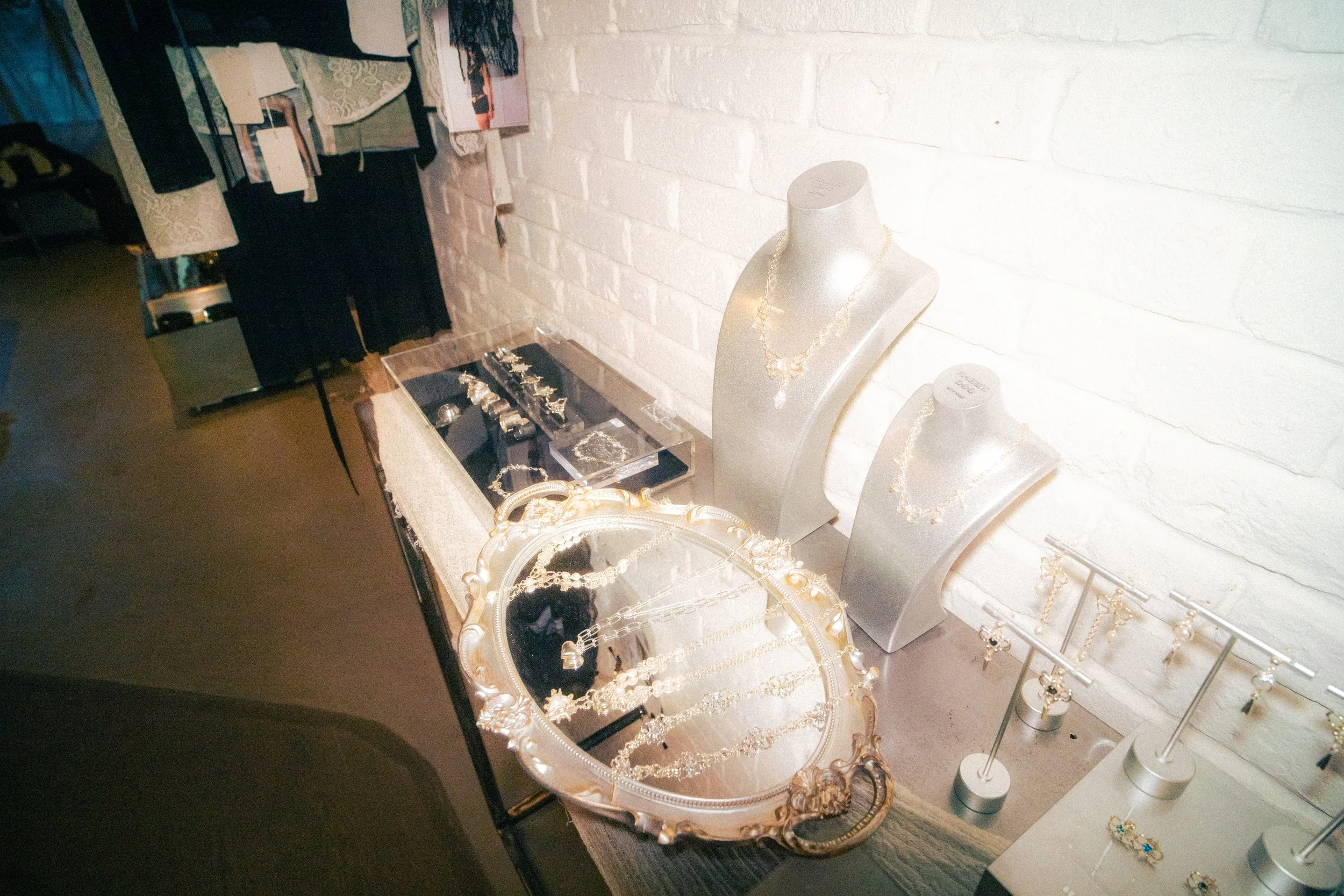
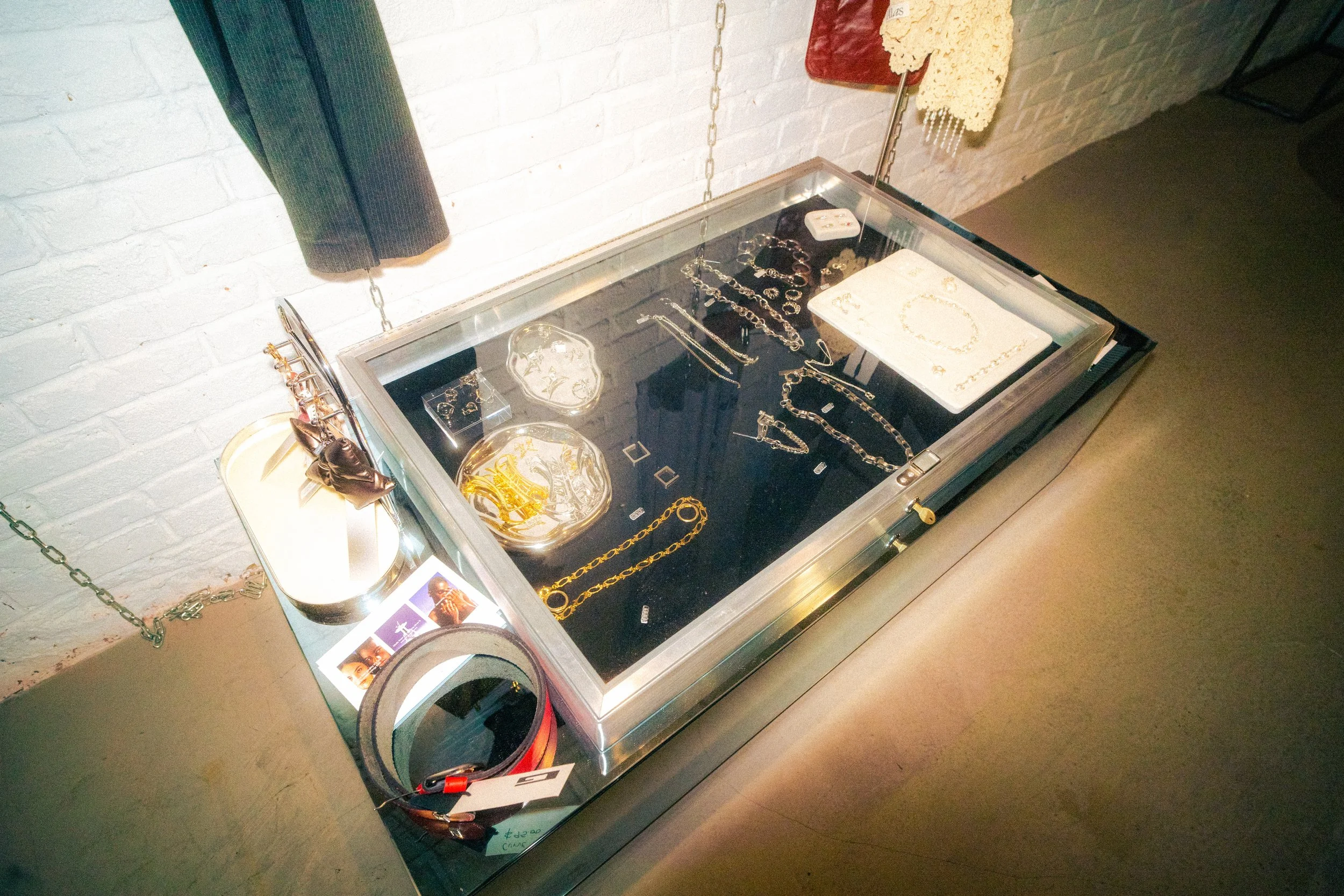
Ask the founders about their favorite designers, and their eyes light up.
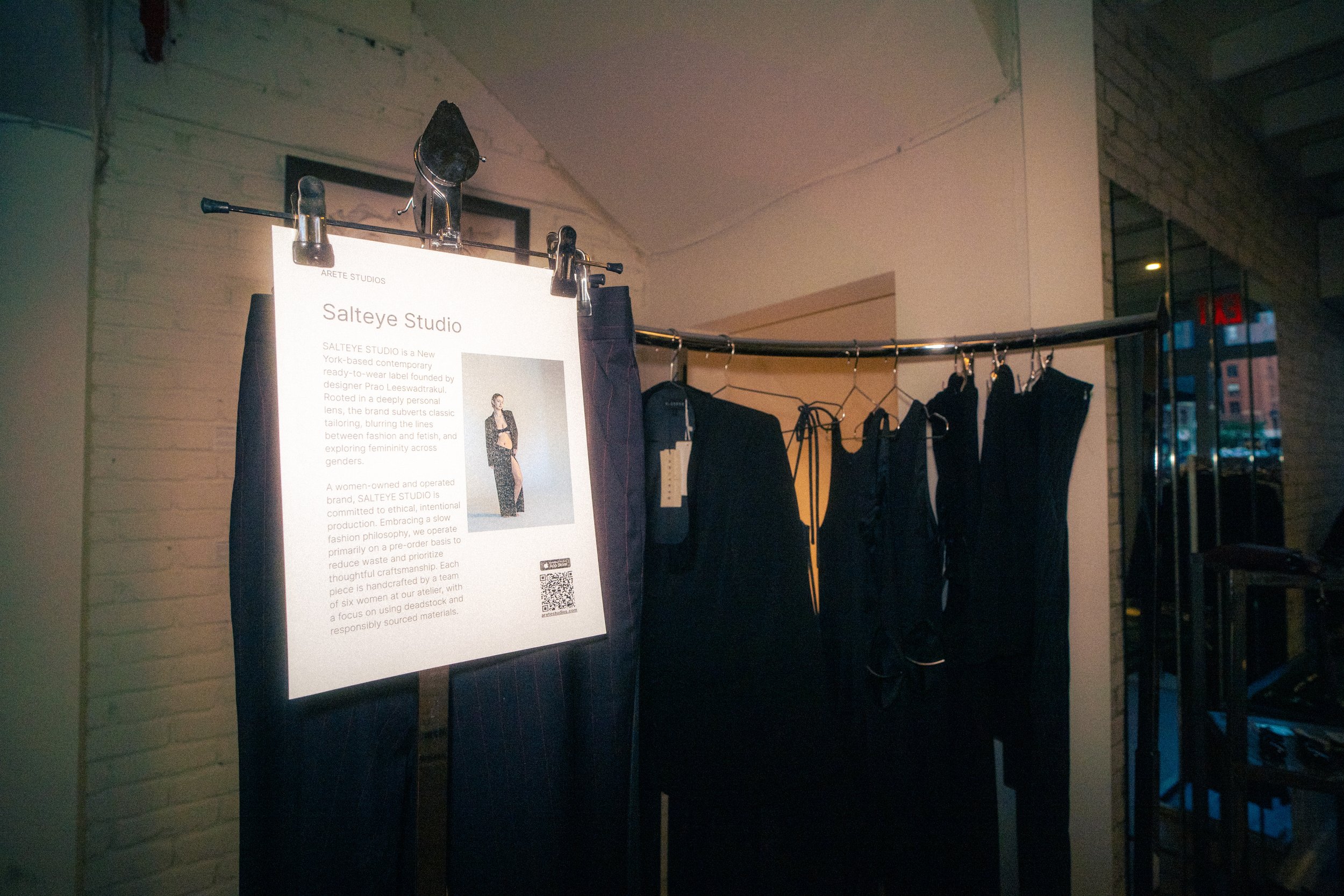
MJ’s current obsession? SALTEYE, a New York–based designer with an atelier in Bangkok.
“Her stuff is like… professional, but with a really sexy edge,” MJ says. “Pinstripes with a dramatic slit, silver buckle hardware — super wearable but still bold.”
She also highlights Portuguese brand Designation, known for boxy silhouettes, dark denim, and structured leather, and basics brand Chini, which brings high-quality essentials to the mix.
Arete’s curation isn’t niche — it’s expansive without being chaotic. “We cover a lot of aesthetics,” MJ says.
“Our customer is the Gen Z woman who wants to explore. She wants discovery.”

Kotryna names the hurdles with the cadence of someone who has lived each one:
international shipping nightmares
customs fees holding packages hostage
designers unknowingly signing on for shipping they can’t afford
app vs. website economics
conversion rates vs. returns
keeping prices accessible to Gen Z without sacrificing designer pay
It’s a lot. But she carries it with ambition, not stress. “The product is less than fifty percent of the business,” she says. “It’s all distribution. That’s the part nobody tells you.” Still — there is no bitterness in her voice. Only drive. Arete isn’t only a platform. It feels like an international launchpad. In the next five years, Jukneviciute envisions the brand becoming the global discovery engine for emerging fashion, pulling from every creative capital that’s shaping the next generation of style:
Tokyo
Seoul
Buenos Aires
Bogotá
London
Berlin
Copenhagen
She talks about expanded physical locations — Los Angeles, Charleston, maybe even abroad — each carrying a curated selection based on their surrounding culture. She talks about incubating designers, taking equity stakes, and guiding them through retail partnerships and wholesale opportunities. And she talks about deepening the technology — creating a retention-driven app experience where shoppers can chat directly with designers, place made-to-order pieces, and access deeper analytics.
MJ drops one of the biggest reveals: “We’re doing a store swap in London this spring,” she says. “It’ll help us understand our English customers and expand our presence abroad.” Her long-term vision? “In five years, we want to be a global brand — online and physical. Integrated with many more designers. Truly tech-enabled.”
So Arete built semantic search, visual recognition, and mood-based browsing directly into the product. It’s not a gimmick — it’s infrastructure.
MJ’s engineering background makes the platform unusually nimble:
“I want us to reach a point where a lot of our decisions — pricing, product ranking, brand onboarding, recommendations — are driven by machine learning,” she says. “We want a company that is truly tech-enabled at its core.”
While the industry struggles to modernize, Arete is already two steps ahead.
Both founders see Arete Studios not just as a marketplace, but as infrastructure — the foundation for a new era of fashion where creativity isn’t held back by borders. Walking through the Arete Studios showroom, you immediately feel the pulse of what’s next. These aren’t basics. They aren’t gala gowns. They’re pieces that make people stop you on the street and ask “Where did you get that?” — without ever dipping into unwearable territory.
It’s cool, it’s global, and it has something modern fashion can lack: Originality. In a reality that worships trends, Arete Studios is trying to build legacy. And it’s working.
Writing and photography by Josh Sauceda.